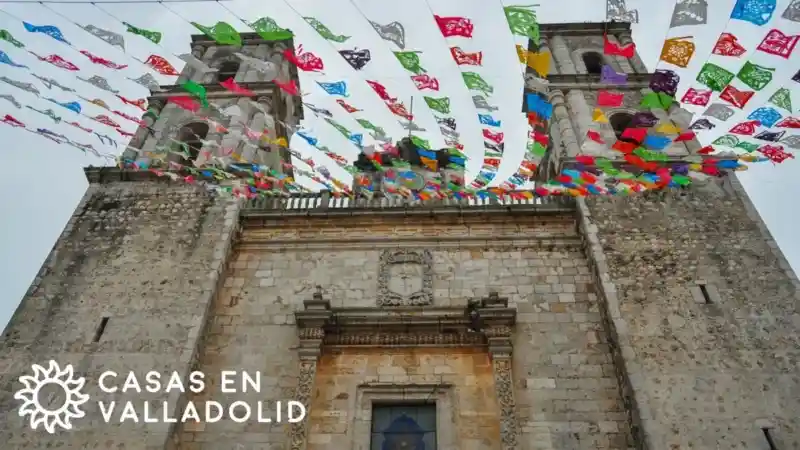

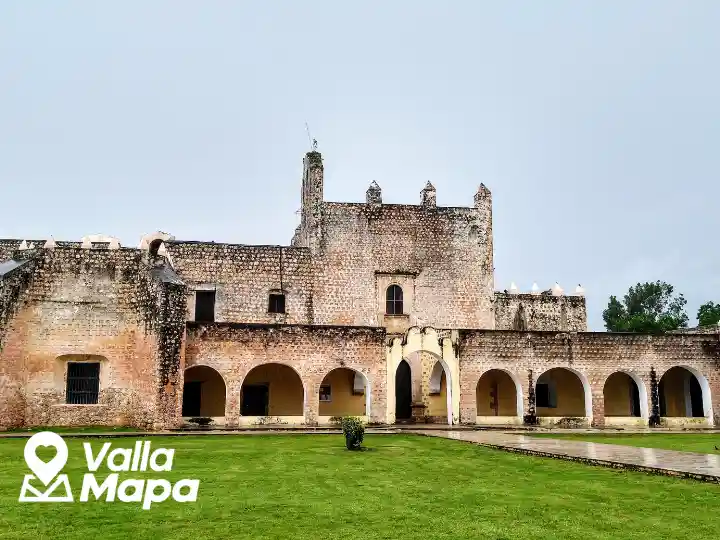
Short answer: San Bernardino de Siena is a 16th-century convent complex in Valladolid’s Sisal neighborhood. Visit for its architecture and layered history, but confirm current opening conditions and treat recent cenote archaeology as protected research, not a public-swimming attraction.
Reviewed July 24, 2026. Access, exhibitions, fees and schedules can change. Verify them with the venue or municipal tourism office on the day of your visit.
Why the complex matters
The official INAH National Catalogue of Historic Monuments records the San Bernardino complex as a protected historic monument in Sisal. INAH research places construction in the 16th century; its repository describes work beginning in 1552 and completion around 1560.
The building combines religious, defensive and hydraulic features. Thick walls, a large atrium and the relationship with the underlying water system make it different from a simple church stop. Read the site slowly: stonework, changes in level, openings and later interventions all help explain how the complex was used.
The Síis Já cenote research
INAH reported continuing underwater archaeological work in the Síis Já cenote beneath the convent. The research includes material connected with the Caste War and the site’s water history.
This does not mean visitors may enter or swim in the cenote. Archaeological work, conservation and public access are separate matters. Follow barriers and staff instructions, and do not repeat social-media claims that present a protected research area as an ordinary cenote tour.
A practical walking route
Approach from the Calzada de los Frailes and allow time for Sisal rather than treating the convent as a quick photo stop.
- Walk the Calzada in the cooler part of the day.
- Observe the exterior and atrium before entering.
- Read on-site interpretation where available.
- Ask what interior areas are open that day.
- Continue through Sisal at neighborhood pace.
- Return with water, shade and a safe route after dark.
VallaMapa’s English Valladolid guide can help connect the visit with museums, food and other neighborhoods.
Respectful visitor behavior
San Bernardino remains a culturally and religiously significant place. Dress and speak with the same respect you would expect in an active place of worship. Do not block ceremonies, climb restricted structures, use flash where prohibited or fly a drone without explicit authorization.
If you are traveling with limited mobility, ask about steps, uneven surfaces and accessible routes before arrival. Historic fabric can create constraints that a general map does not show.
What nearby property buyers should notice
Sisal’s heritage and visitor activity can be attractive, but a famous landmark does not tell you whether a particular house suits daily life. For a property near the convent or Calzada, check:
- exact evening and weekend noise;
- parking and delivery access;
- drainage after heavy rain;
- heritage or permit constraints before altering a facade;
- water, sewer or septic conditions;
- CFE history and internet availability;
- title, cadastral measurements and legal access.
Use the Valladolid neighborhood guide for comparison, then visit the exact street at several times. A licensed advisor can coordinate documents and local checks, but legal opinions belong to the notary or qualified lawyer.
Frequently asked questions
Is San Bernardino de Siena in Centro?
It is in the traditional Sisal neighborhood, connected to central Valladolid by the Calzada de los Frailes.
Can visitors enter the Síis Já cenote?
Do not assume so. INAH’s announcement concerns archaeological research. Follow current official access rules.
How old is the convent?
INAH sources place its construction in the 16th century, with work beginning in 1552 and completion around 1560.
How long should I allow?
Allow at least enough time to see the exterior, available interior areas and part of Sisal without rushing. Confirm access before planning around a fixed duration.
Is Sisal a good place to buy a house?
It can suit buyers who value heritage and central access, but the decision must be made street by street after legal, structural, service and noise checks.